
Blog Details
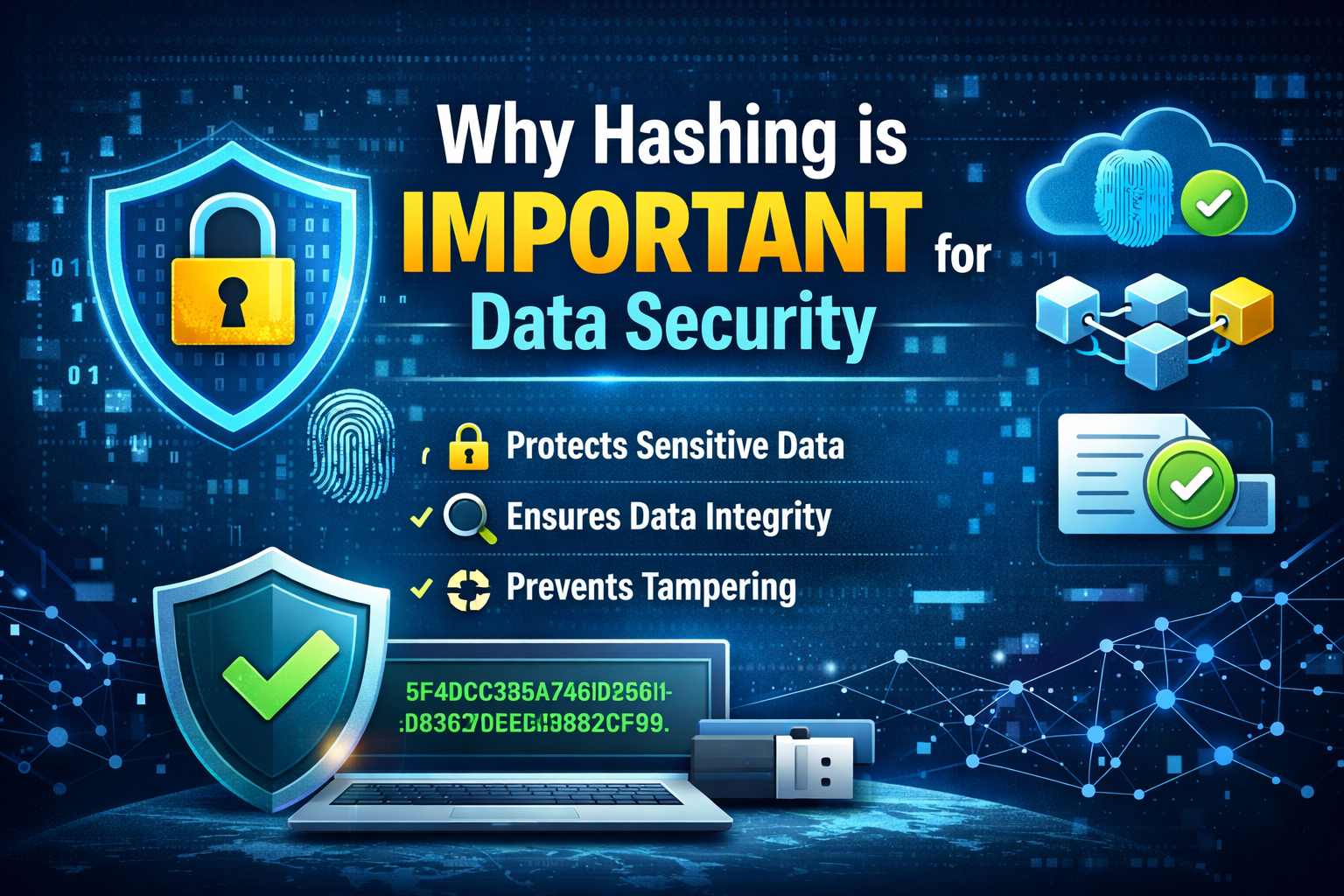
Why Hashing is Important for Data Security
3–4 min read
Introduction
In today’s digital world, data is one of the most valuable assets. From passwords and banking details to personal messages, everything needs protection. This is where hashing plays a crucial role. Hashing is a powerful technique used in cybersecurity to protect sensitive information and ensure data integrity. It converts data into a fixed-length string, making it nearly impossible to reverse or tamper with.
What is Hashing?
Hashing is the process of converting any input data (like text, files, or passwords) into a unique string of characters using a mathematical algorithm. This output is called a hash value or digest. Even a small change in the input creates a completely different hash, making it highly secure.
For example, a password like “123456” will turn into a completely unreadable string after hashing.
Key Reasons Why Hashing is Important for Data Security
- This is why most websites never store your real password.
- If the hash matches, the file is safe.
- If it changes, the data has been tampered with.
- This method protects users even if the system is compromised.
- This is especially useful in file transfers and software downloads.
1. Protects Sensitive Information
Hashing ensures that sensitive data such as passwords are not stored
in their original form. Even if a database is hacked, attackers cannot
easily read the actual data because it is stored as hashes.
2. Ensures Data Integrity
Hashing helps verify whether data has been altered or not. When a file
is shared, its hash value can be compared before and after downloading.
3. Fast and Efficient Security
Hashing algorithms are designed to be quick and efficient. They can
process large amounts of data in seconds, making them ideal for
real-time security applications.
4. Used in Password Authentication
When you log in to a website, your password is hashed and compared
with the stored hash. This ensures secure authentication without
exposing the original password.
5. Backbone of Modern Technologies
Hashing is widely used in modern technologies such as blockchain,
digital signatures, and SSL certificates. It helps secure transactions
and maintain trust in online systems.
6. Prevents Data Tampering
Since even a tiny change in data results in a completely different hash, it becomes easy to detect unauthorized modifications.
7. One-Way Security Mechanism
Hashing is a one-way function, meaning it cannot be reversed easily. This makes it highly secure compared to encryption in certain use cases.
Limitations of Hashing
While hashing is powerful, it is not perfect. Weak algorithms like MD5 and SHA-1 are now considered insecure due to vulnerabilities. Modern systems use stronger algorithms like SHA-256 for better protection.
Conclusion
Hashing is a fundamental part of data security in the digital age. It protects sensitive information, ensures data integrity, and supports secure authentication systems. Whether you are browsing websites, making online payments, or using apps, hashing works behind the scenes to keep your data safe.
In simple words, hashing is the invisible shield that protects your digital world.