
Blog Details
The Role of Hashing in Digital Forensics
2 min read
Introduction
In today’s digital era, cybercrimes such as data breaches, identity theft, and financial fraud are increasing rapidly. To investigate these crimes, digital forensics plays a crucial role in collecting and analyzing electronic evidence. One of the most important technologies used in this process is hashing. Hashing helps ensure that digital evidence remains secure, unchanged, and legally valid throughout the investigation.
Understanding Hashing
Hashing is a process that converts any type of data into a fixed-length string using a mathematical algorithm. This output, known as a hash value, acts like a digital fingerprint of the original data. Even a minor change in the input will produce a completely different hash, making it highly reliable for verification purposes. Popular hashing algorithms include MD5, SHA-1, and SHA-256.
Role of Hashing in Digital Forensics
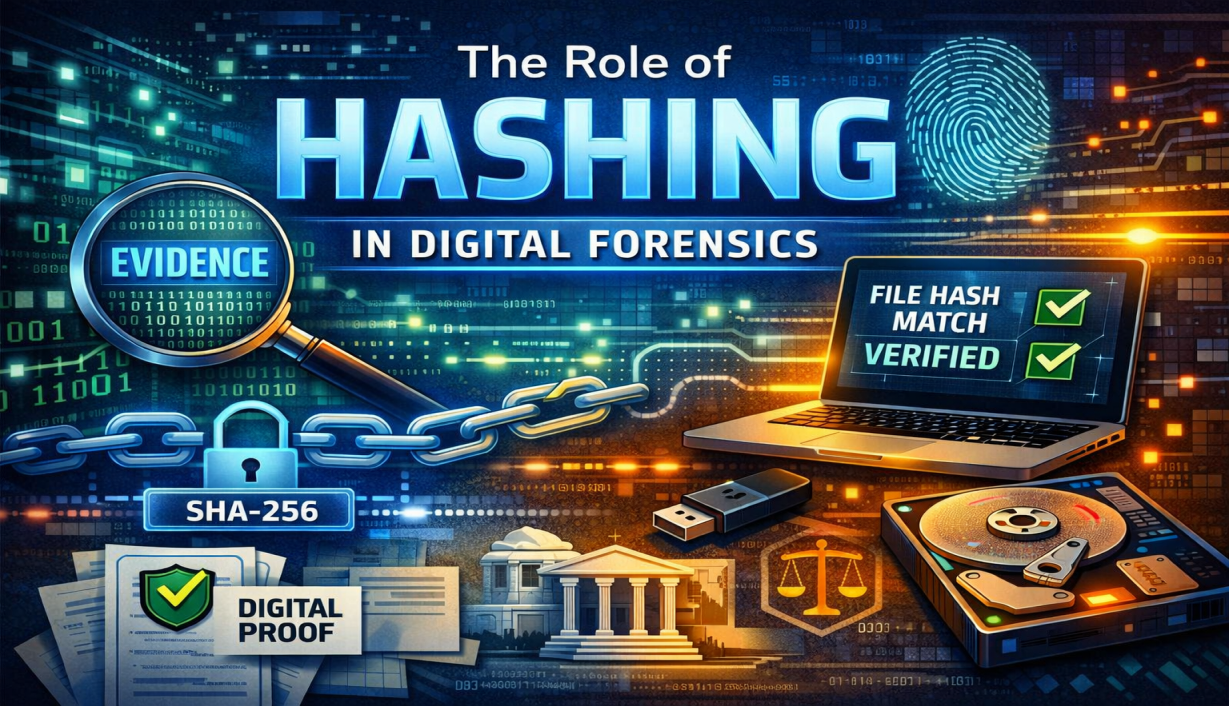
In digital forensics, hashing is primarily used to verify the integrity of digital evidence. When investigators collect data from devices such as computers or mobile phones, they generate a hash value of the original data. This hash is later used to confirm that the evidence has not been altered during analysis. It ensures that the investigation process remains transparent and trustworthy.
Ensuring Data Integrity
One of the most critical roles of hashing is maintaining data integrity. If even a single bit of data is modified, the hash value changes completely. This allows forensic experts to easily detect any unauthorized changes in the evidence. By comparing hash values before and after analysis, investigators can confirm that the data remains intact.
Maintaining Legal Validity
In legal proceedings, digital evidence must be proven authentic to be accepted in court. Hashing provides strong proof that the data has not been tampered with. It supports the chain of custody by documenting that the evidence remained unchanged from the time it was collected to its presentation in court.
Detecting Duplicate and Tampered Files
Hashing also helps investigators identify duplicate files quickly. Instead of manually comparing files, they can simply compare hash values. Additionally, if a file has been altered or tampered with, its hash value will differ from the original, making it easy to detect manipulation.
Real-World Applications
Hashing is widely used in cybercrime investigations, corporate fraud detection, and digital audits. Law enforcement agencies rely on hashing to validate evidence, while organizations use it to secure sensitive data and detect unauthorized access or changes.
Challenges in Hashing
Although hashing is highly effective, it has some limitations. Older algorithms like MD5 and SHA-1 are vulnerable to collisions, which can compromise security. Additionally, handling large volumes of data can be time-consuming during forensic analysis.
Future of Hashing in Digital Forensics
With the advancement of technology, more secure hashing algorithms and AI-powered forensic tools are being developed. These innovations will improve the efficiency, accuracy, and reliability of digital investigations, making hashing even more powerful in the future.
Conclusion
Hashing plays a vital role in digital forensics by ensuring data integrity, authenticity, and security. It acts as a backbone for digital investigations, helping experts verify evidence and maintain trust in the legal system. As cyber threats continue to evolve, the importance of hashing will only continue to grow.