
Blog Details
Why File Verification is Important in Today’s Digital World
3–4 min read
Introduction
In today’s digital era, data has become one of the most valuable assets for individuals and businesses alike. From sharing documents to downloading software and managing sensitive information, everything depends on digital files. However, with the increasing dependency on technology, the risk of data tampering, corruption, and cyber threats has also grown significantly. This makes file verification an essential practice to ensure that the files we use and share remain secure, authentic, and unchanged.
Understanding File Verification
File verification is the process of confirming that a file has not been altered or corrupted during storage, transfer, or download. It works by generating a unique digital fingerprint, known as a hash value, for every file. When a file is verified, its current hash value is compared with the original one. If both values match, the file is considered authentic and safe to use.
Protection Against Cyber Threats
In the modern digital landscape, cyber attacks have become more sophisticated and frequent. Hackers often modify files to insert malicious code. File verification acts as a strong defense mechanism by identifying unauthorized modifications and ensuring safer digital interactions.
Ensuring Data Integrity
Maintaining data integrity is crucial, especially for business documents and financial records. File verification ensures that the file remains exactly the same as the original version, preventing errors caused by corruption or transfer issues.
Building Trust in Digital Communication
File verification helps build trust by ensuring that shared files are genuine and untampered. This is especially important when exchanging sensitive or professional data.
Detecting File Corruption Early
File corruption can occur due to incomplete downloads or system failures. Verification helps detect such issues early, preventing data loss and system errors.
Importance for Developers and IT Professionals
Developers rely on file verification to ensure that software and code are delivered securely without modification. It helps maintain quality and reliability.
How File verification Works
File verification uses algorithms like MD5, SHA-1, and SHA-256 to generate hash values. If the recalculated hash does not match the original, it indicates that the file has been altered or corrupted.
Real-World Applications
It is widely used in software downloads, backup verification, secure file sharing, and enterprise data management to ensure reliability and authenticity.
Simplifying File Verification with Hash Calculator
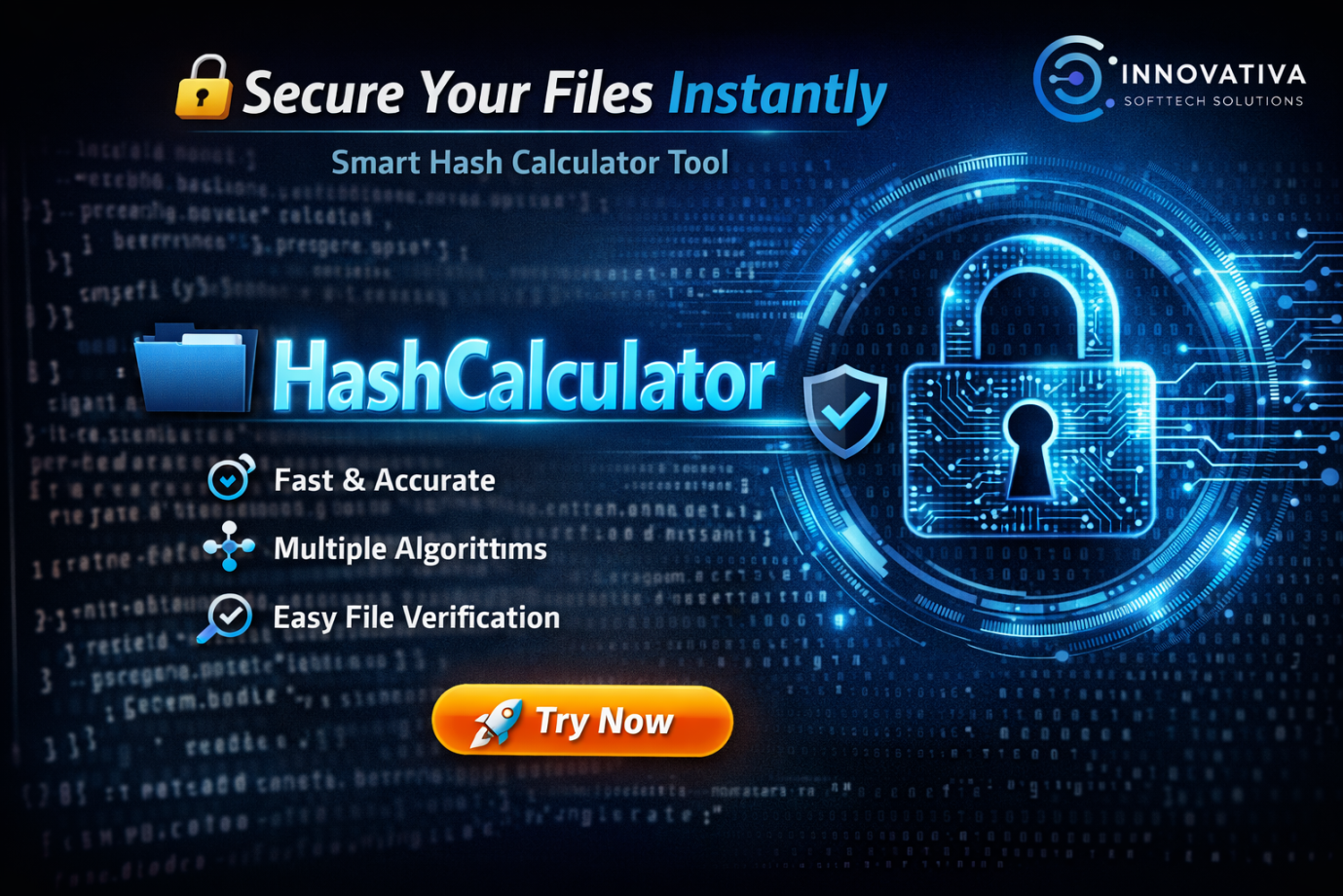
Tools like hash Calculator by Innovativa Softtech make file verification simple. Users can generate and compare hash values easily, ensuring quick and accurate results.
Conclusion
As digital dependency grows, file verification becomes essential. It protects against cyber threats, ensures data integrity, and builds trust. Even a small change in data can have major consequences, making verification a powerful tool for digital security.